Osmosis vs water softener: which one do I actually need?
It's the most common question as soon as someone decides to "do something" about their water: do I get a water softener or an osmosis system?. They're different things, not rivals. Let's explain it without the muddle.
What each one does
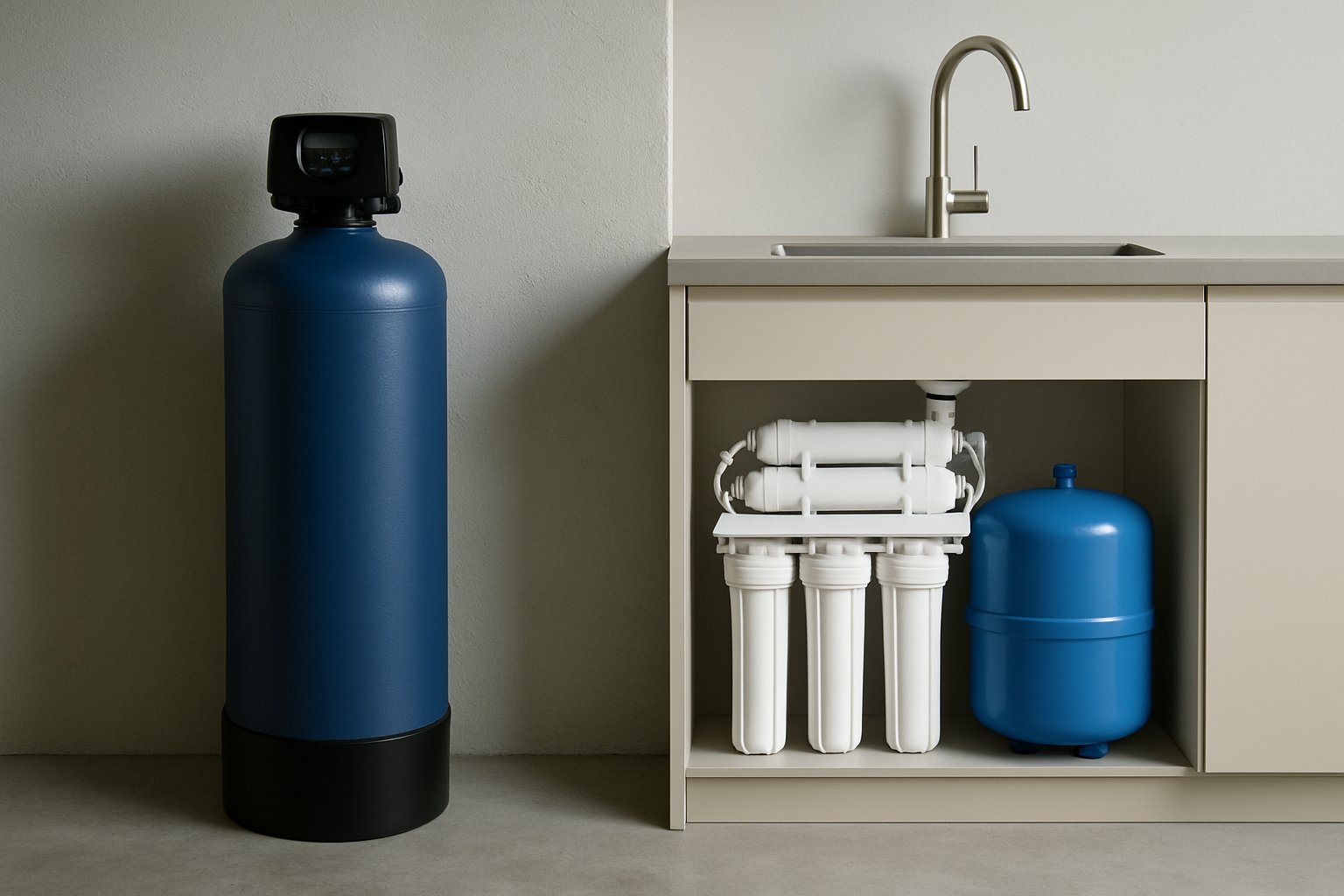
The water softener is installed at the main water inlet of the home. It swaps calcium and magnesium (the minerals that form limescale) for sodium using a resin that regenerates with salt. All the water entering the house comes out softened: sink, shower, boilers, appliances.
The reverse osmosis is installed under a sink and filters only the water from a dedicated tap. In 5 stages it removes limescale, chlorine, salts, heavy metals and microplastics. It's the water for drinking and cooking.
Quick comparison
- Where it acts: softener = the whole house. Osmosis = only the sink tap.
- What it removes: the softener, only the hardness (limescale). Osmosis, almost everything: limescale, chlorine, salts, metals.
- Drinking water: the softener adds some sodium; for drinking, osmosis is the way.
- Protecting the installation: softener excellent; osmosis doesn't protect pipes (it only acts at one tap).
- Maintenance: softener = salt every so often. Osmosis = annual filters and a membrane every 2-3 years.
Which one you need, case by case
- Only your drinking water bothers you: residential reverse osmosis.
- Only limescale in pipes, shower and appliances bothers you: water softener.
- Everything bothers you (the usual case in Malaga and Marbella when the water is very hard): both. It's the optimal combination.
Can they be combined? Yes — it's the recommended setup in very hard water
The softener protects the whole installation and keeps limescale from shortening the life of boilers, water heaters, washing machines and taps. Osmosis finishes the job on drinking water. Neither replaces the other: they're complementary.
Once the softener has softened the water, the osmosis membrane also lasts longer, because it works less.
How to decide without getting it wrong
The decision isn't theoretical: it depends on your home's specific water, your installation and what bothers you. We'll run a free water test: we measure, show you the results, and tell you which system (or combination) makes sense in your case.
More questions on this topic
Can softened water be drunk?
How much salt does a softener use?
Can I start with just the osmosis and add the softener later?
Want real water in your home or business?
Free water test in Malaga, Marbella and the whole Costa del Sol. Fixed quote, no obligation.
Call 600 500 074 →