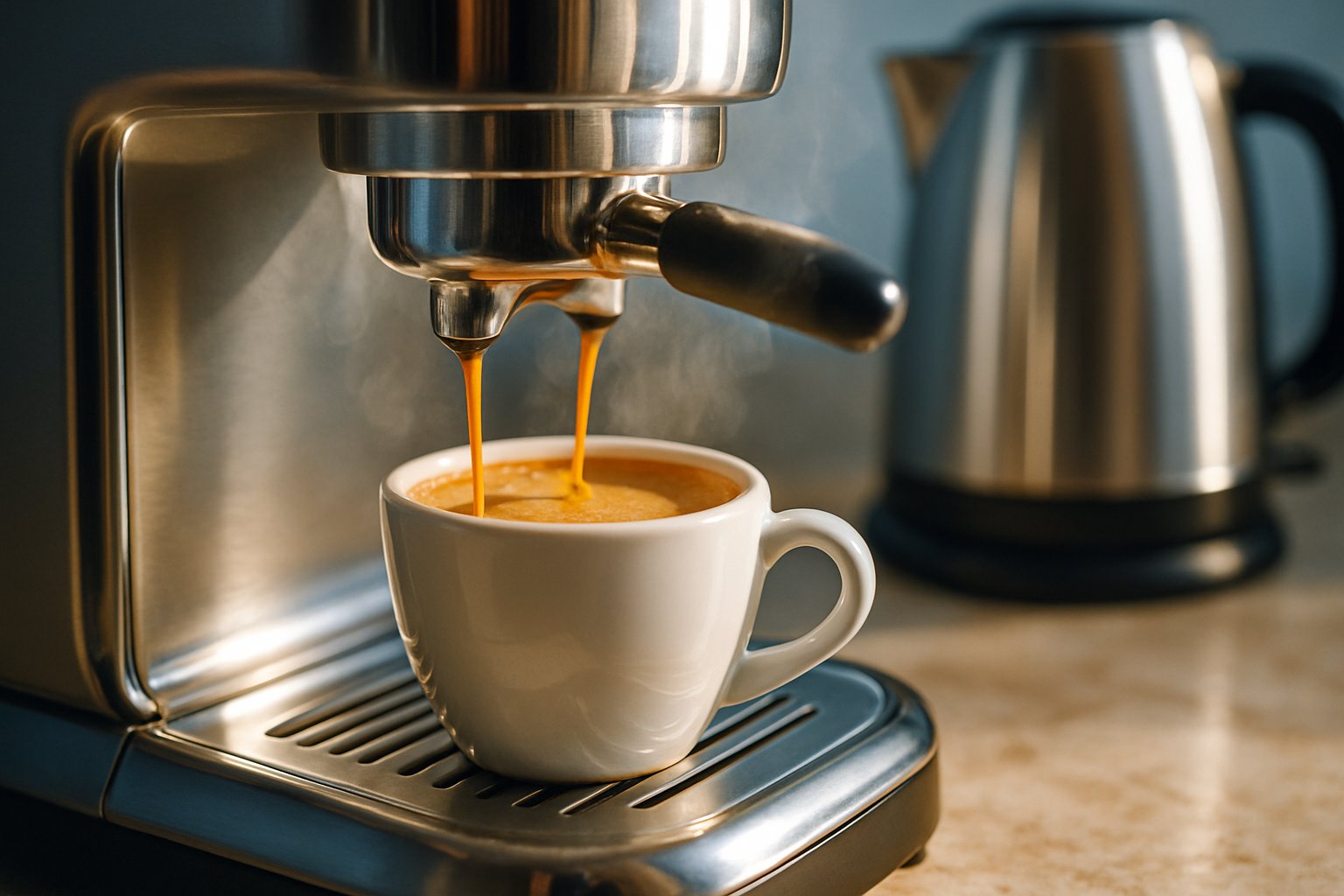
Limescale in coffee machines and kettles: the definitive fix
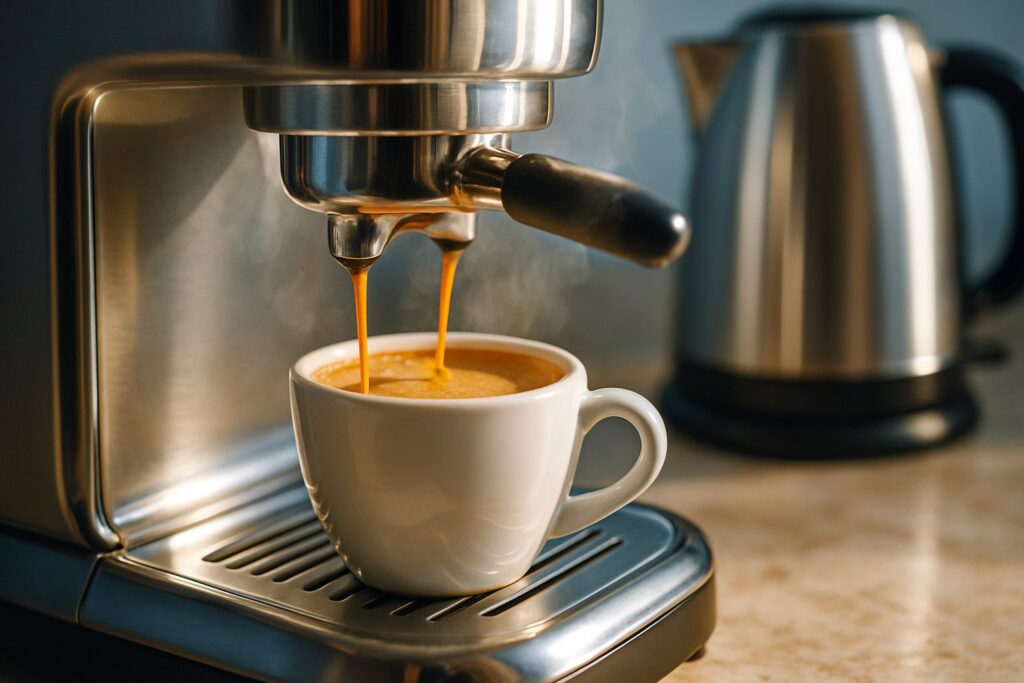
If you live in Malaga or Marbella you've been there: you turn on the kettle and there's a white cloud at the bottom. The coffee machine asks to be descaled every two weeks. The coffee doesn't taste the same anymore. It's the limescale in the water, and it's not about cleaning better: it's how the water here works. Let's explain it and give you the fix that actually lasts.
Why limescale forms
The Costa del Sol's water carries a lot of dissolved calcium and magnesium. When you heat it (coffee, kettle, water heater, boiler), those minerals precipitate and stick to the heating elements as a grayish-white layer. The hotter, the more scale forms.
The problem isn't cosmetic: limescale is a thermal insulator. Every millimeter of scale on a heating element sharply cuts heat transfer. The machine works harder to heat the same amount, uses more energy and breaks down sooner.
What happens to your coffee
- Lower extraction temperature: weaker, less aromatic coffee.
- Uneven pressure: scale clogs the lines and the crema loses body.
- Metallic notes: the mineral itself adds a background that "muddies" the coffee.
- Machine lifespan cut in half in heavy-limescale cases.
Fixes people try... and why they're not enough
- Descaling with vinegar or citric acid: works once, but doesn't stop it coming back. Some manufacturers also advise against vinegar.
- The machine's own filter: partial, short-lived relief (weeks).
- Buying bottled water for the coffee: expensive, inconvenient, and does nothing for the kettle or the boiler.
The lasting fix: treat the water before it reaches the machine
Two routes, depending on how far you want to go:
- Coffee and drinking water only: residential reverse osmosis under the sink. The coffee gets water without limescale or chlorine, and the machine stops scaling up. The usual choice for homes.
- The whole installation: water softener at the water inlet. Beyond the coffee, you protect boiler, water heater, washing machine, shower screen and taps. See the osmosis vs softener comparison.
In hospitality the answer is usually professional osmosis, because coffee volume is high and the ice makers suffer too.
One number to help you decide
A mid-range home coffee machine easily lasts twice as long with treated water. The lifespan gained usually covers the cost of the osmosis system several times over. Add the kettle, the boiler and the small appliances, and the math does itself.
How we start
We test your water for free, tell you the real hardness and propose the fix that fits: ask us for the water test. Fixed quote, no surprises, no obligation.
More questions on this topic
Is limescale in coffee bad for your health?
Is the machine's own filter enough?
With osmosis, when would I need to descale the machine again?
Want real water in your home or business?
Free water test in Malaga, Marbella and the whole Costa del Sol. Fixed quote, no obligation.
Call 600 500 074 →