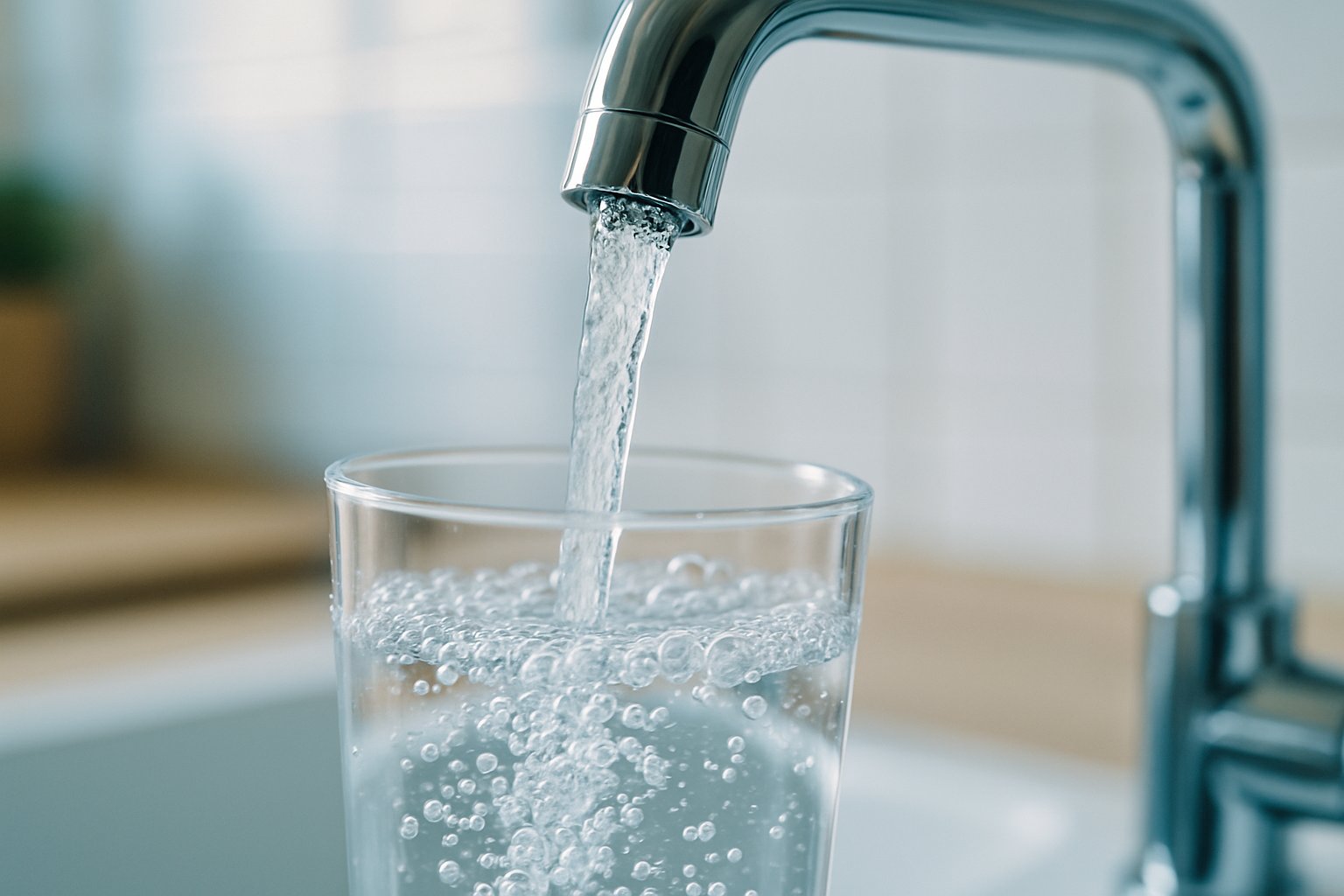
Chlorine taste in tap water: why it happens and how to remove it
It's one of the most common complaints in Malaga and Marbella: "my water tastes of chlorine". It's not your imagination, and it's certainly not a fault in your house. It's a reality of the urban supply, and it has a simple solution. Let's explain it.
Why water tastes of chlorine
Chlorine is added to drinking water to disinfect it: it kills bacteria on the journey through the pipes to your home. It's an essential public health measure. By regulation, water must reach your tap with a minimum residual chlorine level.
You notice it more at certain times because:
- In summer, chlorination is reinforced due to higher consumption and temperatures.
- After work on the network, it's briefly raised to guarantee quality.
- Some neighborhoods get more residual chlorine due to proximity to the plant or the tank.
Is drinking chlorinated water bad?
At legal levels, no. Residual chlorine comes in very small amounts and poses no risk. It's a matter of taste and smell: it's off-putting, makes tap water unappealing and ends up driving people to buy bottled water.
How it's removed
Chlorine is very easy to remove with activated carbon. There are several options depending on how far you want to go:
- Filter jug: removes chlorine and some taste, but not limescale or salts. See jug vs osmosis.
- Tap-mounted filter: cheap, but limited and short-lived.
- Residential: the best result — a unit under the sink removes chlorine, limescale and salts. Stable water, no surprises, all year round.
The old trick (and why it doesn't pay)
Leaving water in an open jug for 30-60 minutes evaporates much of the chlorine. True — but it's inconvenient (you have to remember), incomplete, and removes nothing else. Modern filters are far more practical.
The other problem that shows up at the same time
When people call us about the chlorine taste, they almost always mention the limescaletoo: marks in the bathroom, a scaled-up coffee machine, rough laundry… That's a different issue (the water hardness) and it's solved with a water softener. Many homes go for osmosis + softener at once, because both problems disappear in one stroke.
How we check it at your home
In the free water test we measure residual chlorine with a reagent, the TDS with a meter, and the real hardness. In a short while we tell you whether you need just a basic filter, an osmosis system, or a combined treatment.
More questions on this topic
Can I boil the water to remove chlorine?
Does the chlorine taste get worse over the years?
Does osmosis remove 100% of the chlorine?
Want real water in your home or business?
Free water test in Malaga, Marbella and the whole Costa del Sol. Fixed quote, no obligation.
Call 600 500 074 →