Reverse osmosis or filter jug: which pays off in Malaga?
If you live in Malaga or Marbella and don't like your tap water, two options come up right away: the filter jug from the supermarket and the reverse osmosis system under the sink. Both filter water, but they don't do the same job or cost the same over time. Let's compare them properly.
What each one does
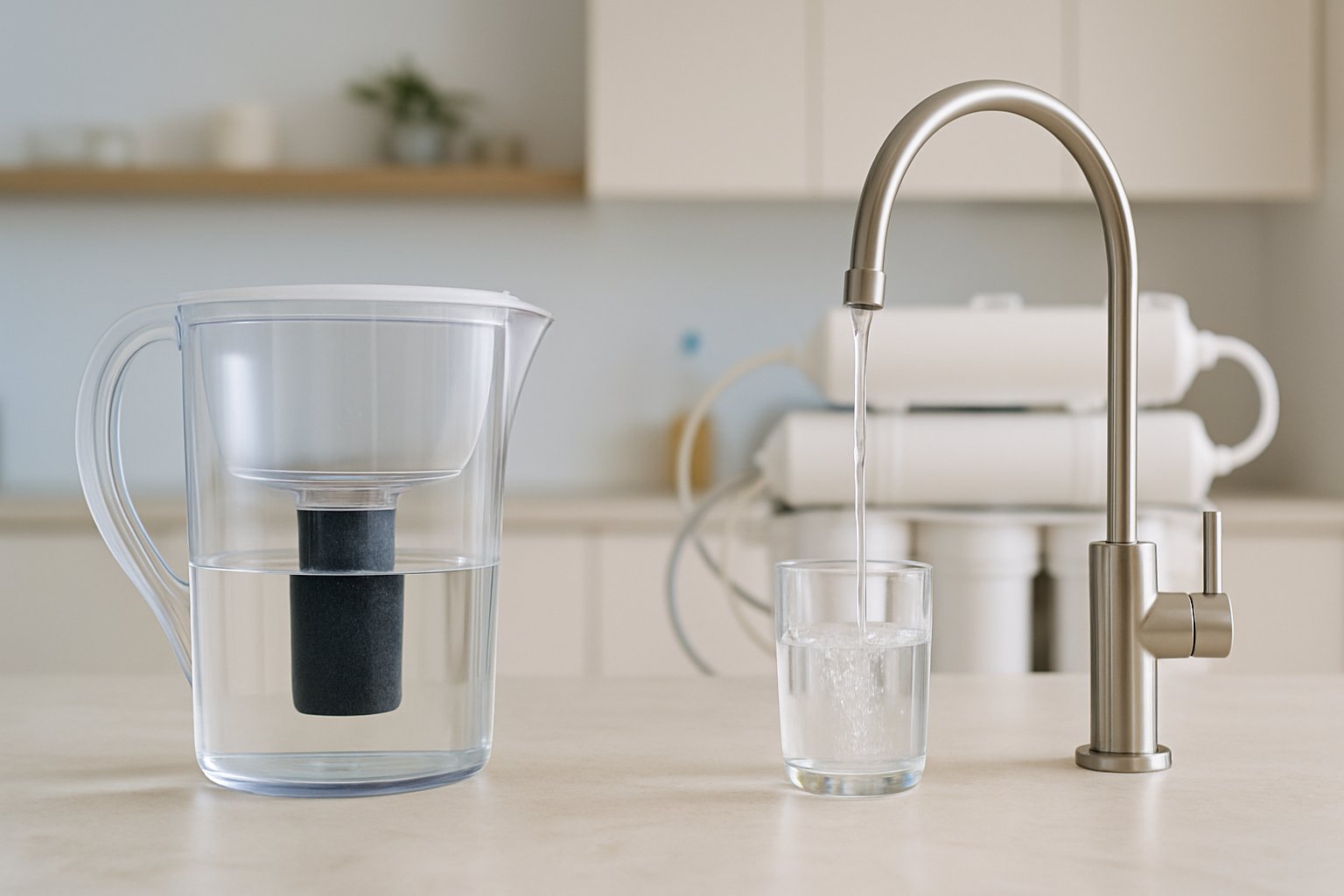
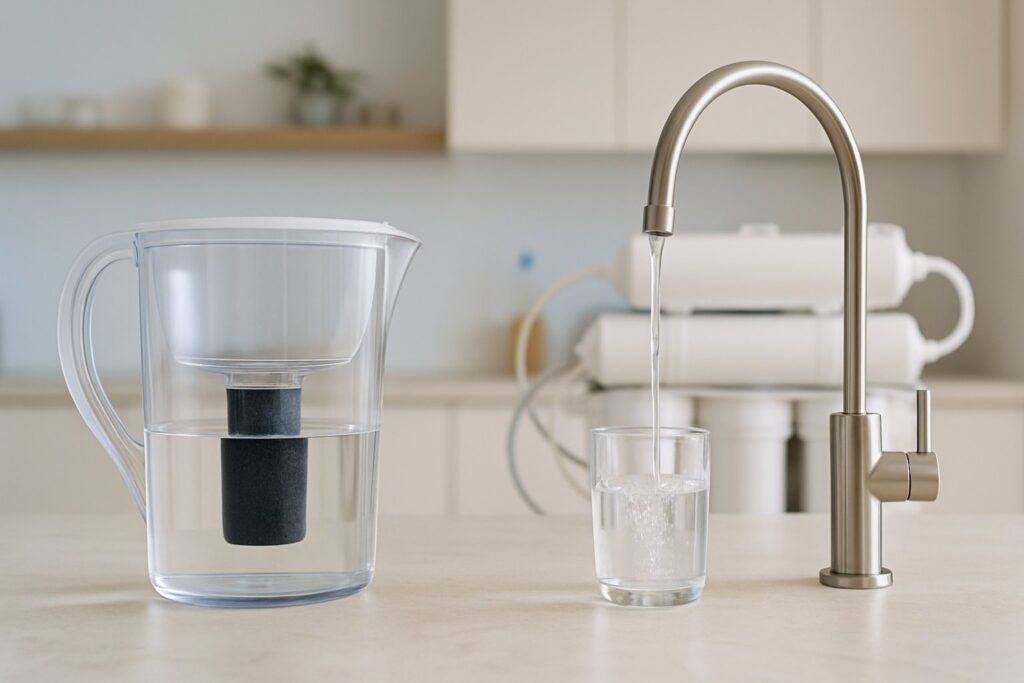
The filter jug uses a cartridge of activated carbon, sometimes combined with ion-exchange resin. It traps chlorine, some off-tastes and a small part of the limescale. It doesn't remove salts, heavy metals or microplastics: the water stays practically the same in hardness.
The residential reverse osmosis system filters water in 5 stages. The key is the semipermeable membrane, which traps salts, limescale, heavy metals, chlorine and microplastics. The water that comes out is light, free of strange tastes and perfect for drinking and cooking.
Real savings (with numbers)
A family of four that only drinks bottled water easily spends between €200 and €400 a year, plus hauling bottles and generating a lot of plastic.
- Filter jug: €30-50 for the jug, plus €40-80 a year in cartridges (one per month). It only treats the water that fits in the jug, and you have to keep refilling it.
- Residential: the system costs more upfront, but after that you only pay for the annual filter change. It delivers unlimited water from the sink tap.
In most cases, osmosis pays for itself within months compared to bottled water. Against the jug, the savings are less about money and more about water quality and not depending on buying and changing cartridges.
What each type of home chooses
If you live alone or drink very little water, the jug can make sense as a stopgap. If you're a family, you have kids, you're bothered by the limescale in Malaga or Marbella's water or you make lots of baby bottles, coffees and teas — osmosis pays off from day one.
And if limescale is also attacking coffee machines, kettles and taps, it's worth pairing it with a water softener for the whole installation.
Practical advice
You don't have to decide in the dark. We'll run a free water test: we measure your specific water's hardness and impurities and tell you whether a jug, an osmosis system or a combo with a softener pays off for you. No obligation.
More questions on this topic
Does a filter jug remove limescale?
Does osmosis waste a lot of water?
Do I need a permit to install an osmosis system?
Want real water in your home or business?
Free water test in Malaga, Marbella and the whole Costa del Sol. Fixed quote, no obligation.
Call 600 500 074 →