TDS: what it is and what your tap water should read
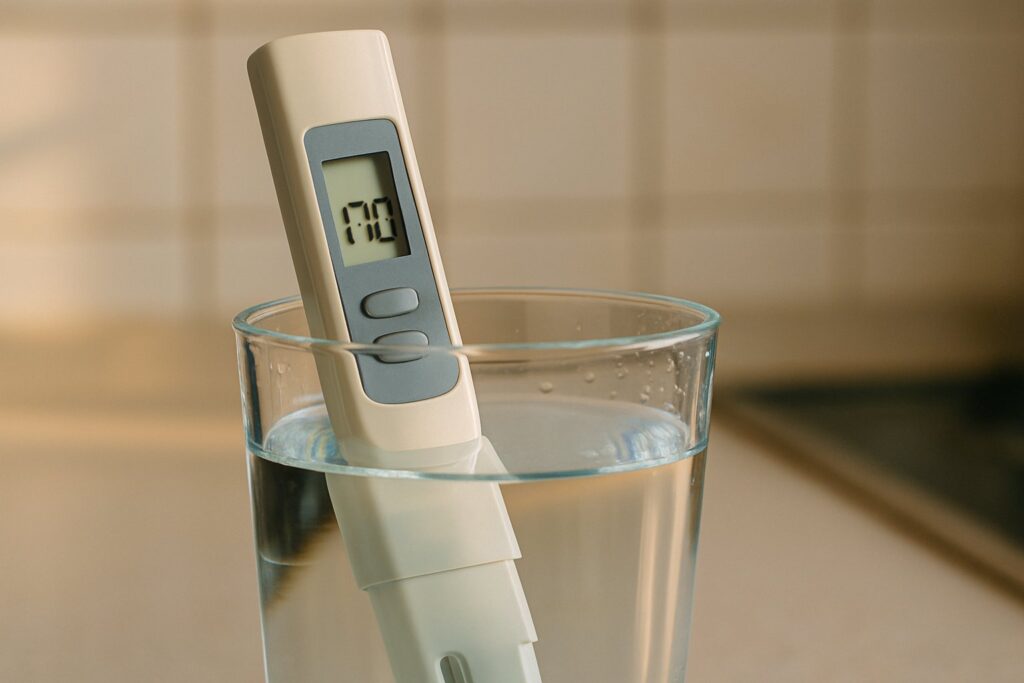
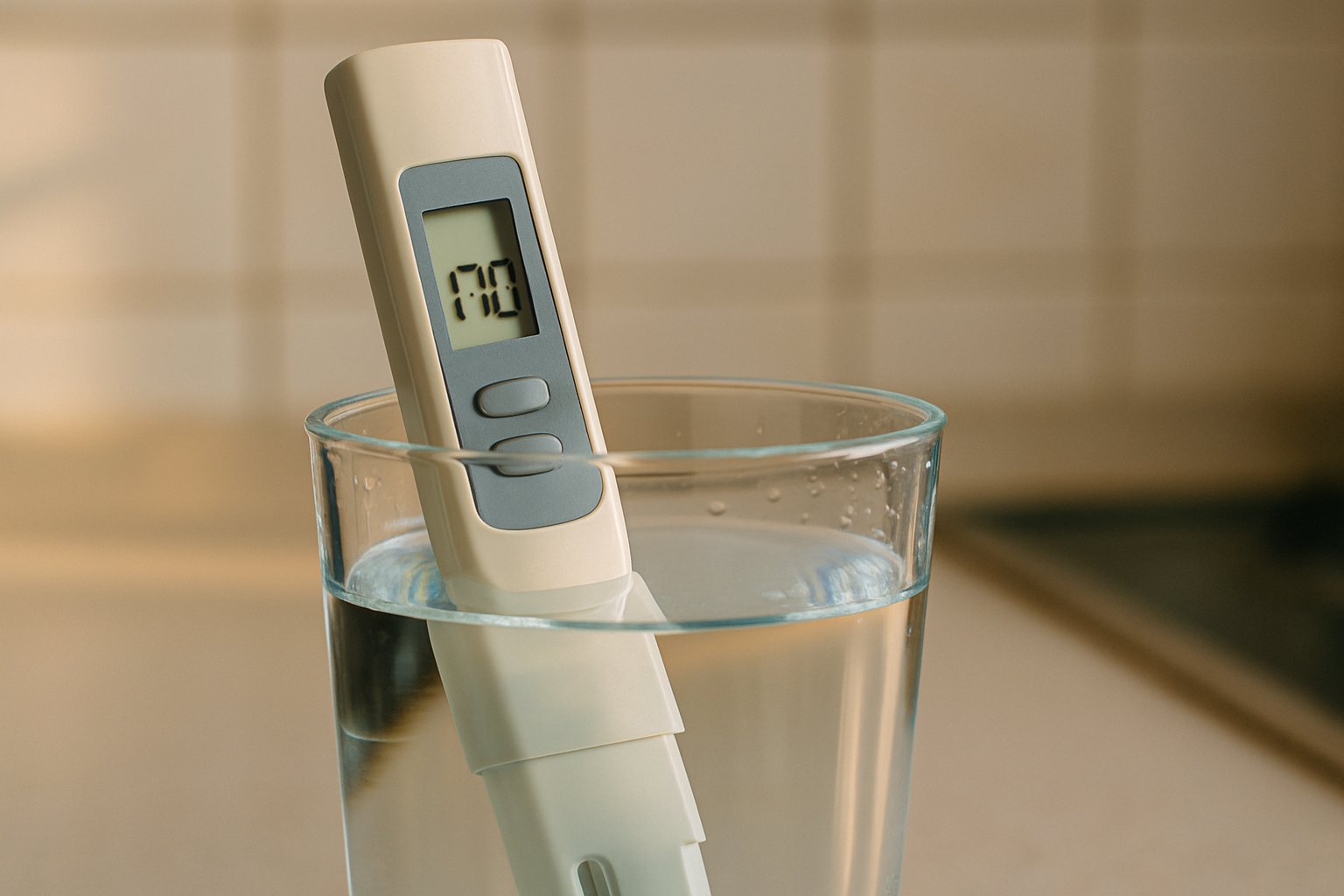
When we come to run a water test at your home, we always pull out a little gadget: a TDS meter. It's the best quick snapshot of your water. In this article we explain what it measures, what readings are normal and what they actually tell you.
What TDS is
TDS stands for Total Dissolved Solids: total dissolved solids. It's everything your water carries dissolved that you can't see: mineral salts (calcium, magnesium, sodium), bicarbonates, chlorides, sulfates, some metals. It's measured in ppm (parts per million) or in mg/L: they're equivalent.
The meter doesn't distinguish harmless salts from contaminants, but it gives a general picture: the higher the mineral load, the "harder" the taste and the more limescale.
What Malaga and Marbella's water reads
It depends on the neighborhood and season, but as a guide:
- Low-mineralization bottled mineral water: 20-100 ppm.
- Tap water in Malaga and Marbella: between 300 and 700 ppm is typical. In areas with more limescale it can reach 800.
- Reverse osmosis water: between 15 and 50 ppm after the membrane.
Water between 300 and 700 ppm is drinkable and safe by law, but it's hardwater: you notice it when drinking, in the limescale on coffee machines and kettles and in the white marks in the bathroom.
How to read the number
These are the ranges we usually work with in practice:
- 0-50 ppm: very pure water (typical of a recent osmosis system).
- 50-150 ppm: very low mineralization.
- 150-300 ppm: medium mineralization, "light"-tasting water.
- 300-500 ppm: noticeable mineralization, some hardness starts to show.
- 500-800 ppm: hard water (our coast usually sits here).
- +800 ppm: very hard water, with a clear impact on plumbing and taste.
TDS isn't everything
A TDS of 400 can be excellent water (lots of good calcium and magnesium) or mediocre (unwanted salts). The meter can't tell. That's why, in the water test we combine TDS with real hardness (French degrees) and with smell and taste: that's how we know what suits you.
And once you have your osmosis system
With a osmosis system up and running, TDS should drop from 300-700 to under 50. If you see it rise, the membrane is asking to be replaced: that's the "tell-tale" for your maintenance.
More questions on this topic
Does a high TDS mean the water is dangerous?
Can I buy a TDS meter myself?
At what TDS does limescale start damaging coffee machines?
Want real water in your home or business?
Free water test in Malaga, Marbella and the whole Costa del Sol. Fixed quote, no obligation.
Call 600 500 074 →